Steam Oven Buying Guide
Everything you need to know to choose the right steam oven for your kitchen, cooking style, and budget.
Quick Decision Guide
- Trying steam cooking: Start with a $250-400 countertop model (Cuisinart, Tovala)
- Serious home cook: ~$1,300 countertop combi (Anova Precision Oven 2.0)
- Kitchen renovation: $2,500-4,000 built-in combi (Bosch 800, Miele DGC 6000)
- Dream kitchen: $5,000-10,000 luxury built-in (Gaggenau, Wolf, Miele DGC 7000)
Decision 1: Countertop or Built-In?
This is the fundamental choice that determines your budget range and installation complexity.
| Factor | Countertop | Built-In |
|---|---|---|
| Price Range | $200-$1,200 | $2,000-$10,000+ |
| Capacity | 0.5-1.2 cu ft | 1.4-2.5 cu ft |
| Installation | Plug and play | Professional required |
| Electrical | Standard 120V outlet | Often 240V dedicated |
| Portability | Take it when you move | Permanent fixture |
| Counter Space | 18-22" depth needed | None (in wall) |
| Feature Set | Basic to moderate | Full featured |
| Best For | Testing, renters, small kitchens | Renovations, serious cooks |
Choose Countertop If...
- - You're new to steam cooking
- - You rent your home
- - Budget under $1,500
- - You want flexibility to move it
- - You already have a good wall oven
Choose Built-In If...
- - You're remodeling your kitchen
- - You want maximum capacity
- - Counter space is limited
- - You cook for larger groups
- - You want professional-grade features
Decision 2: What Type of Steam?
Steam ovens come in four varieties, each suited to different cooking styles:
| Type | Max Temp | Can Brown? | Price Range | Best For |
|---|---|---|---|---|
| Full Steam | 212°F | No | $200-$1,500 | Vegetables, fish, reheating |
| Combi-Steam | 450°F+ | Yes | $400-$10,000 | Most versatile choice |
| Steam-Assist | 500°F+ | Yes | $1,500-$4,000 | Bread baking focus |
| Superheated Steam | 485°F | Yes (oil-free) | $1,500-$2,500 | Health-focused crisping |
Our Recommendation: Combi-Steam
Unless you have a specific use case (like pure steam for health reasons or superheated steam for oil-free cooking), combi-steam offers the most flexibility. You get three cooking modes in one appliance:
- Steam only: Vegetables, fish, eggs, reheating
- Convection only: Roasting, baking, crisping
- Combination: Juicy roasts, artisan bread, faster cooking with browning
Decision 3: Features That Actually Matter
Steam ovens come loaded with features. Here's what's worth paying for—and what you can skip.
Essential Features
Descale function
Mineral buildup is inevitable. A built-in descaling program makes maintenance much easier.
Easy-access water tank (reservoir models)
You'll refill frequently. A front-accessible tank saves frustration. Look for 1+ liter capacity.
Drip tray
Steam creates condensation. A removable drip tray makes cleanup practical.
Worth Having
Temperature probe
Nail perfect doneness on meats without guessing. Essential for roasts and thick proteins.
Steam percentage control
Dial in exact humidity levels (20%, 50%, 80%) instead of just "on" or "off." Found on premium models.
Multiple rack positions
Cook vegetables and protein simultaneously on different levels.
Preset cooking programs
Helpful for beginners. Select "salmon" or "broccoli" and let the oven handle time/temp.
Skip Unless Important to You
WiFi/App connectivity
Nice for guided cooking and remote monitoring, but rarely essential. Often adds $200-500 to price.
Direct plumb connection
Eliminates tank refills but requires plumbing. Reservoir models work fine for most home cooks.
Pyrolytic self-clean
Steam ovens are already easy to clean. The steam environment prevents baked-on residue.
Decision 4: Understanding Brand Tiers
Gaggenau, Miele (DGC 7000), Wolf
Professional-grade performance, exceptional build quality, comprehensive warranties. These are the brands restaurant-trained chefs buy for their home kitchens.
Expect: Full steam percentage control, precise temperature management, seamless integration with other appliances, 2+ year warranties.
Miele (DGC 6000), Thermador, Bosch 800
Excellent performance with most features you'd want. The sweet spot for serious home cooks who don't need absolute top-tier.
Expect: Reliable combi-steam, good preset programs, solid build quality, 1-2 year warranties.
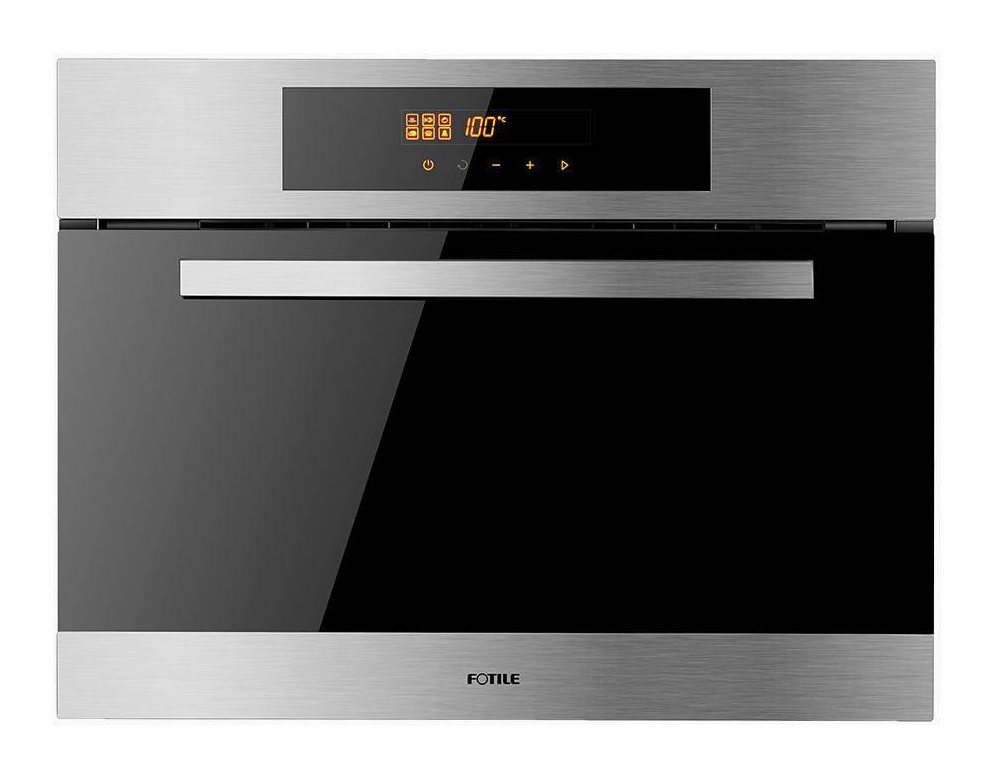
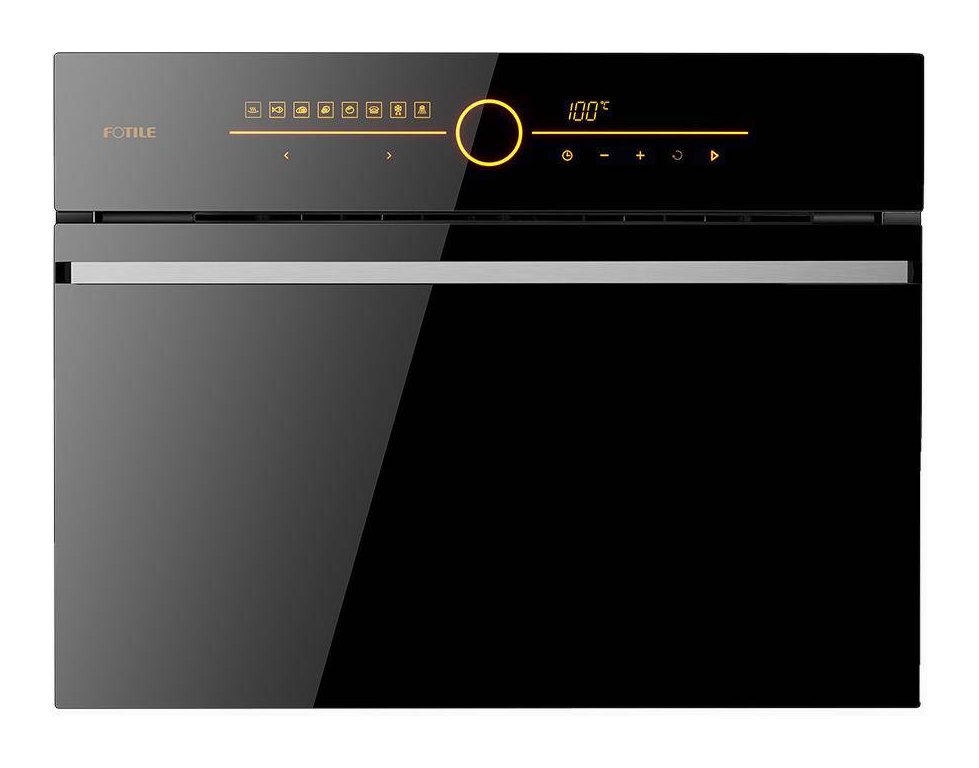
Bosch 500, Sharp SuperSteam+, Fotile
Capable steam ovens with fewer bells and whistles. Good value if you prioritize function over features.
Expect: Basic combi functionality, fewer presets, simpler interfaces, 1 year warranties.
Cuisinart, Tovala, Panasonic, Breville
Countertop models that deliver solid steam cooking at accessible prices. Perfect for testing whether steam cooking fits your lifestyle.
Expect: Smaller capacity, simpler controls, adequate performance, 1 year warranties.
Anova Precision Oven, Brava
High-tech countertop options with smart features, app control, and precise cooking. Bridge the gap between entry countertop and built-in.
Expect: WiFi connectivity, guided cooking programs, excellent temperature control, modern design.
Installation Requirements
For built-in models, verify these requirements before purchasing:
Built-In Installation Checklist
Our Recommendations by Scenario
Testing Steam Cooking ($200-400)
Want to try steam cooking without major investment.
Pick: Cuisinart Convection Steam Oven (~$250) or Tovala Smart Oven (~$350)
Both offer combi-steam in a countertop format. Tovala includes a meal delivery service option.
Serious Home Cook ($500-900)
Ready to commit to steam cooking with precise control.
Pick: Anova Precision Oven 2.0 (~$1,300)
Best-in-class countertop with sous vide mode, app guidance, and excellent temperature precision.
Kitchen Renovation ($2,500-4,000)
Building or renovating with budget-conscious choices.
Pick: Bosch 800 Series or Miele DGC 6000
Reliable combi-steam from trusted brands. Bosch edges on value; Miele on features and build quality.
Dream Kitchen ($5,000-10,000)
Want the absolute best home steam oven available.
Pick: Miele DGC 7000, Gaggenau 400 Series, or Wolf Convection Steam
These are the steam ovens you'll find in professional chefs' homes. Exceptional performance, durability, and support.
Health-Focused Cooking ($1,500-2,500)
Primary goal is healthy, oil-free cooking with steam.
Pick: Sharp SuperSteam+ Oven
Superheated steam technology lets you brown and crisp without oil. Built-in with reasonable price point.
Common Mistakes to Avoid
Mistake: Buying pure steam when you want versatility
Full steam ovens can't brown food. If you want roasted vegetables with caramelized edges or crispy chicken skin, you need combi-steam.
Mistake: Not measuring cabinet space for built-ins
Built-in dimensions vary significantly. A model that's 1/4" too wide won't fit. Measure twice, order once.
Mistake: Ignoring water hardness
Hard water accelerates mineral buildup, so factor in more frequent descaling. Do not assume a water filter fixes it: several manufacturers, including Miele, Thermador and Wolf, say their ovens need minerals in the water. Check the manual's water guidance before you buy.
Mistake: Thinking you'll plumb it "later"
Direct plumb connections should be done during installation. Retrofitting is expensive. Decide upfront whether you want reservoir or plumbed.
Mistake: Overspending on features you won't use
WiFi connectivity and 50+ cooking programs sound great but add $500-2000 to the price. Buy for how you actually cook.
Frequently Asked Questions
How much should I expect to spend on a good steam oven?
For countertop: $250-600 gets you a capable combi-steam. For built-in: $2,500-4,000 is the sweet spot for quality without overspending. Luxury built-ins run $5,000-10,000+.
Is a steam oven worth it if I already have a good conventional oven?
Yes, if you cook vegetables frequently, want healthier cooking, or enjoy bread baking. A countertop steam oven ($250-500) complements your existing oven perfectly for these tasks.
Do steam ovens require a lot of maintenance?
More than conventional ovens, but not dramatically. You'll need to: empty the drip tray after use, refill the water tank, and descale every 1-3 months depending on water hardness. The steam environment actually makes interior cleaning easier.
Can I use any cookware in a steam oven?
Use stainless steel, ceramic, glass, or silicone containers. Avoid non-stick coatings (steam can damage them) and reactive metals like copper or aluminum. Perforated pans work well for even steam circulation.
Should I get direct plumb or reservoir?
For most home cooks, reservoir is fine. You'll refill every 30-90 minutes of continuous steam, which covers most cooking sessions. Direct plumb adds installation complexity and cost—worth it mainly for heavy use or if you hate refilling.
What size steam oven do I need?
For 1-2 people: Countertop (0.5-1.0 cu ft) works well. For 3-4 people: Look for 1.0-1.5 cu ft. For larger families or entertaining: 1.5+ cu ft built-in models give you room to cook multiple dishes.
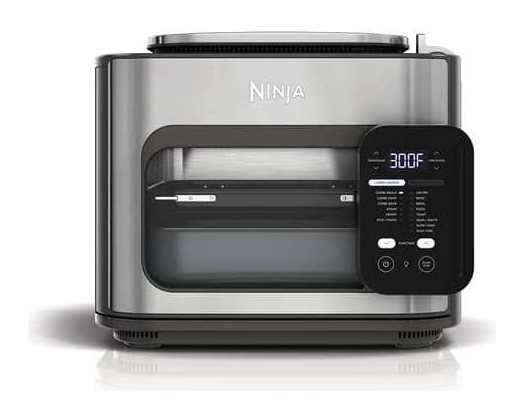
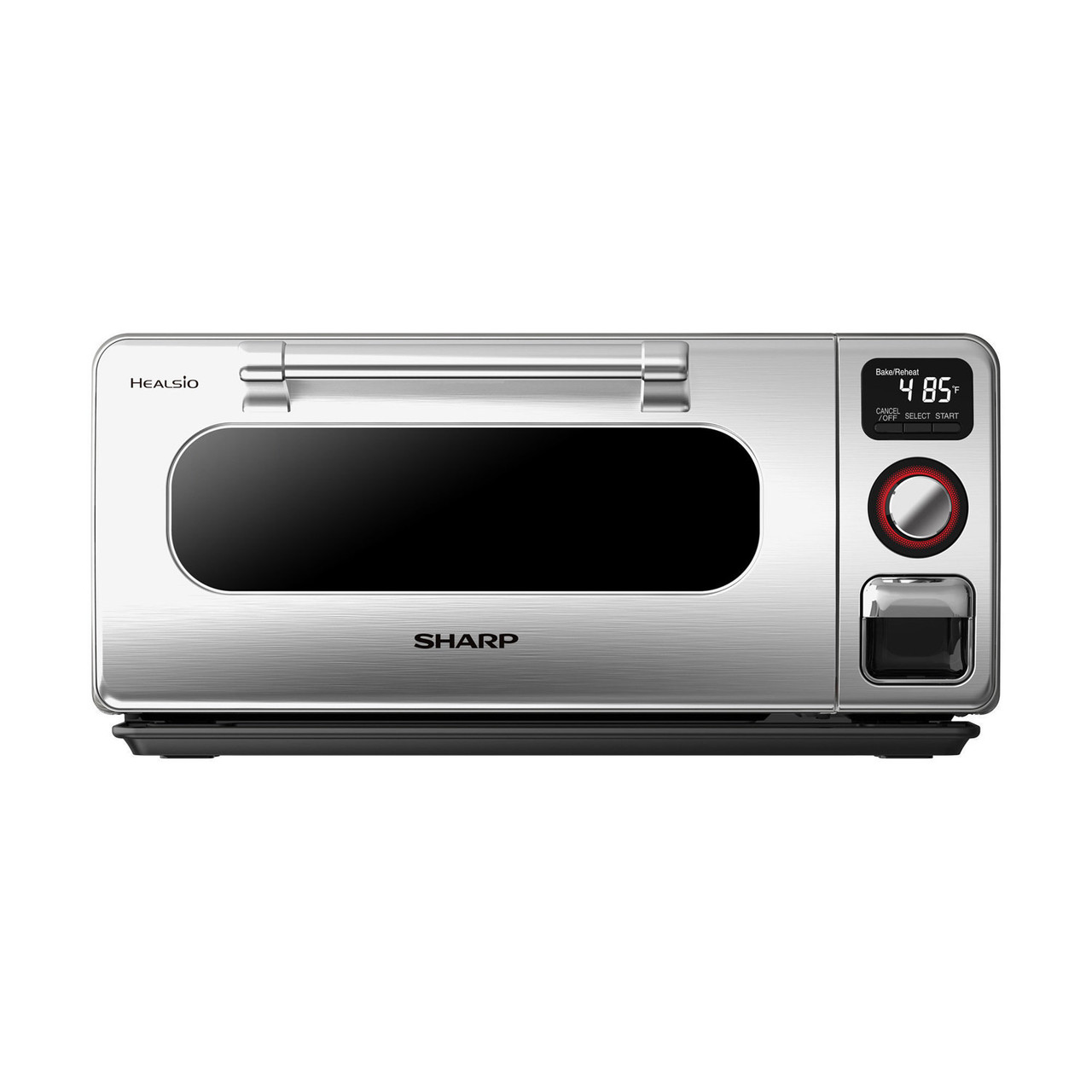
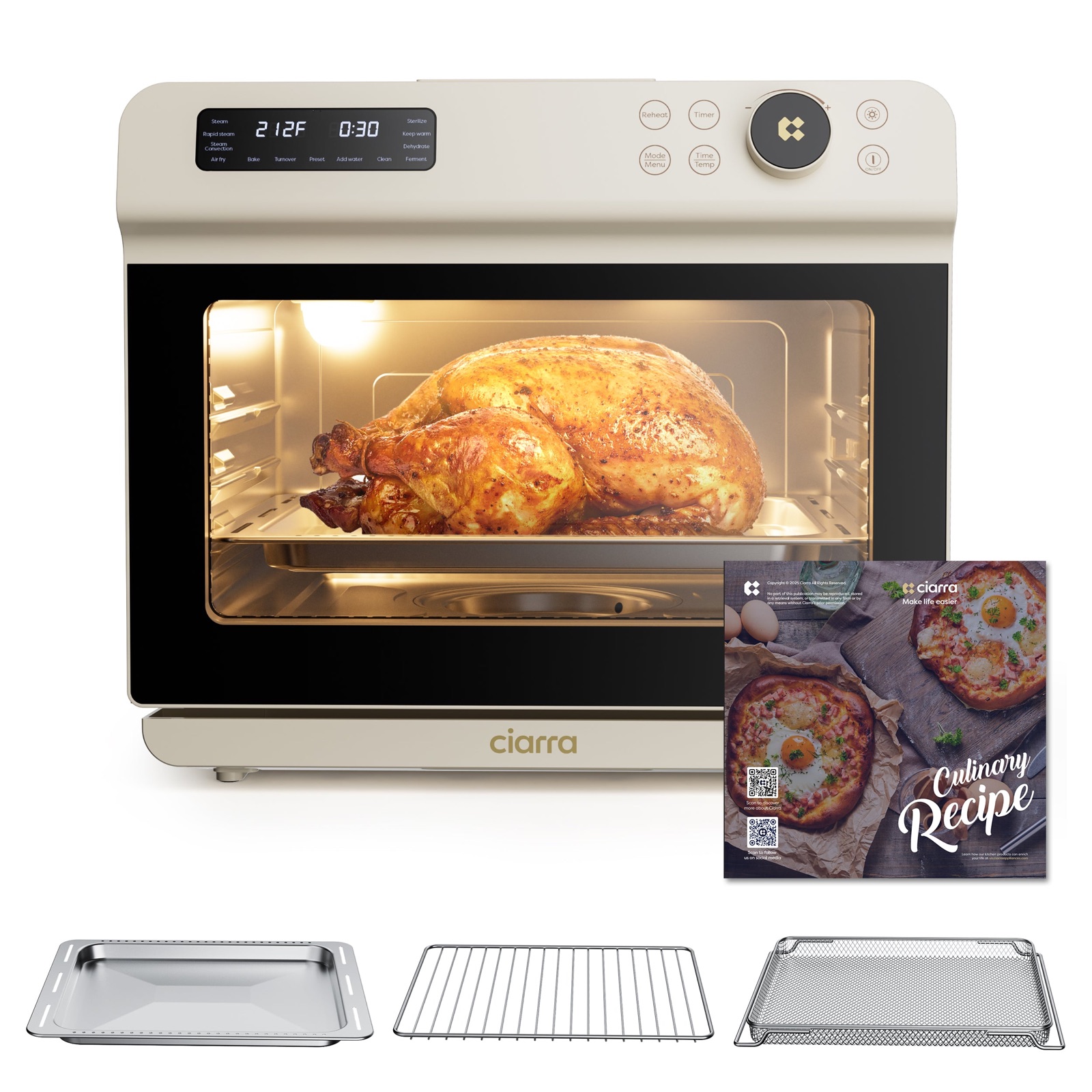
Countertop Steam Ovens
Start here if you're new to steam cooking or want flexibility.
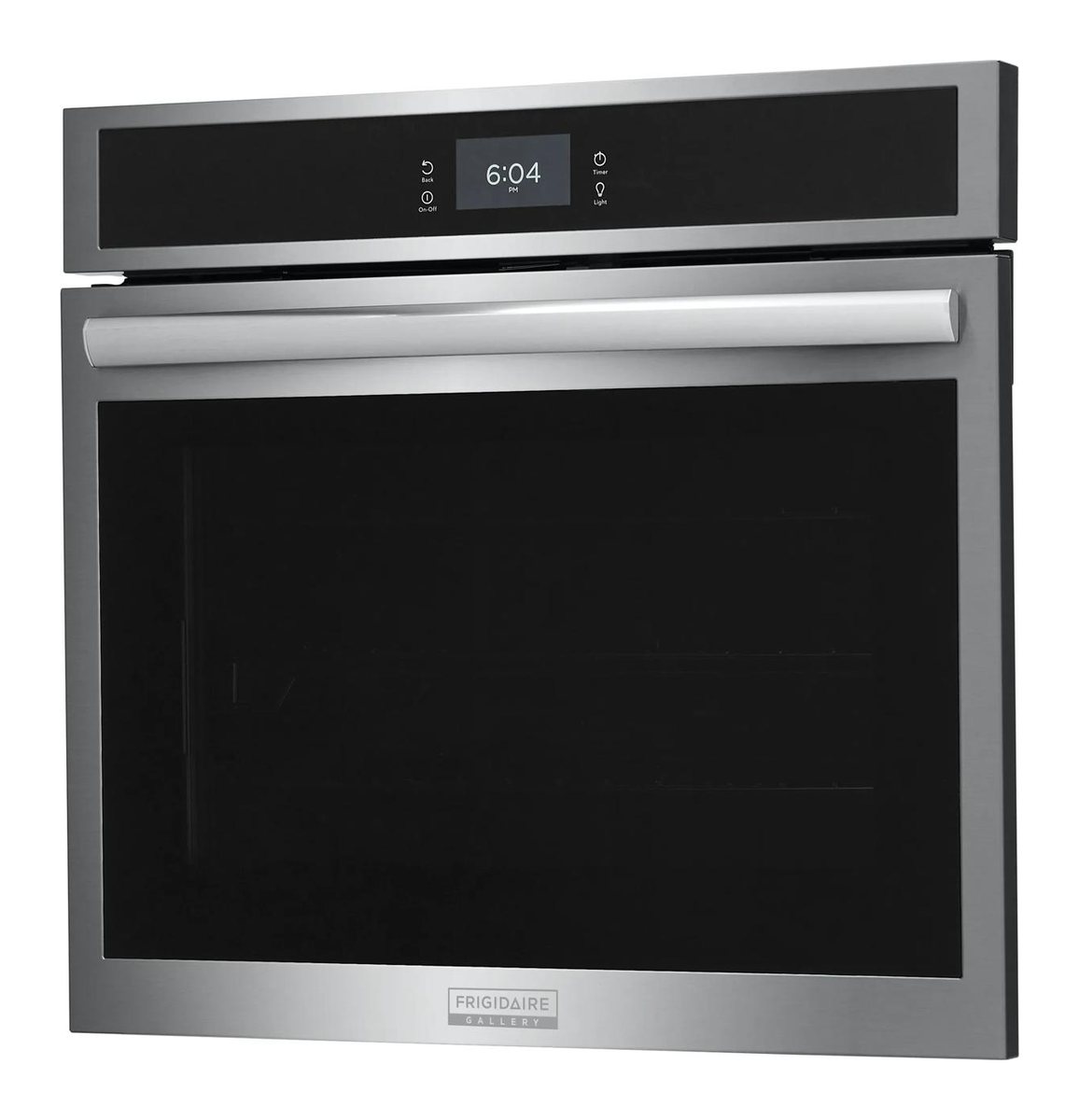
Built-In Steam Ovens
For kitchen renovations and serious home cooks.
Continue Learning
Budget for these too
Most ovens ship with one tray. These are what owners buy in the first month; about $100 together. Affiliate links, at no cost to you.

A general-purpose steam-oven descaler, for ovens whose manual allows a generic one (Anova says any descaling liquid works). Miele and Thermador name their own descalers; use those instead.
View on Amazon · ~$21
Miele's manual recommends perforated containers so steam reaches food from all sides. A 1/3 pan is about 12.75 x 6.9 in; check your oven's interior before buying.
View on Amazon · ~$50
Steam cooks faster than you expect. A one-second probe stops you overcooking fish and chicken while you learn.
View on Amazon · ~$15
Steam burns through cloth mitts. Silicone does not soak, which matters when you open a door full of vapor.
View on Amazon · ~$19