What Is a Steam Oven?
A complete guide to steam cooking technology, from entry-level countertop units to professional-grade built-ins.
The Short Answer
A steam oven cooks food using hot water vapor instead of (or in addition to) dry heat. Steam carries far more usable energy than dry air at the same temperature — when it condenses on cooler food it releases that stored heat directly into the surface, so food cooks faster, retains more nutrients, and stays moist. Prices range from $250 for countertop models to $10,000+ for luxury built-ins. Combi-steam ovens (steam + convection) offer the most versatility for home cooks.
How Steam Ovens Work
Steam ovens surround your food with water vapor and cook it primarily through condensation—as vapor meets the cooler surface of your food it turns back into water, releasing its stored (latent) heat directly into the food. This is fundamentally different from conventional ovens, which cook primarily through convection (circulating hot air) and radiation (heat from the oven walls).
Here's why that matters: condensing steam delivers a large burst of latent heat the instant it touches food—far more energy than dry air at the same temperature can transfer. That's why steam can cook a salmon fillet in 8-10 minutes versus 15-20 minutes in a traditional oven, and why food stays moist instead of drying out.
Three Steam Generation Methods
Water Reservoir
A removable tank you fill with tap water. Most common in countertop and mid-range built-in models.
Capacity: 30-90 min of steam
Direct Plumb
Connected to your water supply. Never refill. Found in premium built-in models ($5,000+).
Requires plumber installation
Steam Injection
Sprays water onto a hot element for quick bursts. Common in steam-assist conventional ovens.
Limited steam control
4 Types of Steam Ovens
Not all steam ovens are created equal. The type you choose should match your cooking style and budget.
1. Full Steam Ovens
Pure steam cooking at a maximum of 212°F (100°C). These ovens cannot brown food because they lack a dry heat element. Best for:
- Vegetables (preserves color, texture, and nutrients)
- Fish and shellfish
- Reheating without drying out
- Sterilizing jars and baby bottles
Price range: $200-$1,500
2. Combi-Steam Ovens (Most Popular)
The Swiss Army knife of steam ovens. Combi models combine steam + convection, letting you use each mode alone or together. This is what most home cooks want because you get:
- Steam mode for vegetables and fish
- Convection mode for roasting and baking
- Combi mode for the best of both (crispy roast chicken that stays juicy)
Price range: $400-$10,000+
3. Steam-Assist Ovens
Conventional ovens with steam injection capability. The steam is typically used in short bursts—like the first 10 minutes of bread baking—rather than throughout cooking. Less precise than true steam ovens but more affordable.
Price range: $1,500-$4,000 (built-in)
4. Superheated Steam Ovens
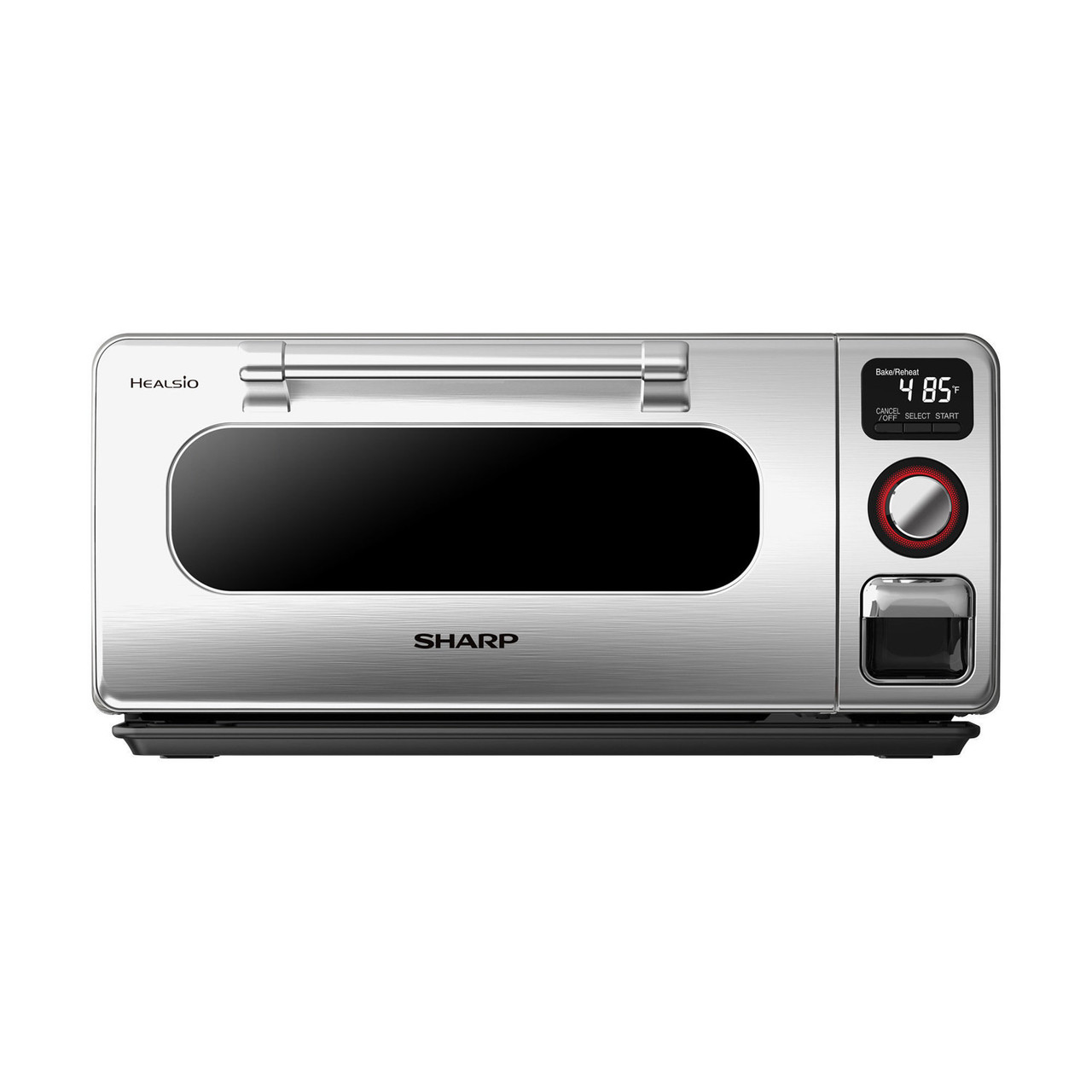
These innovative ovens heat steam beyond 212°F—up to 485°F in models like the Sharp SuperSteam+. At these temperatures, steam can brown and crisp food without any oil. Popular in Japan, now gaining traction in the US.
Price range: $1,500-$2,500
| Type | Can Brown Food? | Max Temp | Price Range | Best For |
|---|---|---|---|---|
| Full Steam | No | 212°F | $200-$1,500 | Health-focused cooking |
| Combi-Steam | Yes | 450°F+ | $400-$10,000 | Most versatile |
| Steam-Assist | Yes | 500°F+ | $1,500-$4,000 | Bread baking |
| Superheated | Yes (no oil) | 485°F | $1,500-$2,500 | Oil-free crisping |
Benefits of Steam Cooking
Preserves Nutrients
Studies show that steam cooking retains up to 90% of water-soluble vitamins (like vitamin C and B vitamins) compared to just 40-50% with boiling. Vegetables keep their vibrant color and firm texture.
Impossible to Dry Out Food
The high moisture environment means proteins stay juicy even if you overcook slightly. Chicken breast—the food most likely to be ruined by dry heat—stays moist and tender.
Professional-Quality Bread
Every professional bakery uses steam. During the first 10-15 minutes of baking, steam keeps the crust pliable while the bread expands (called "oven spring"), resulting in a better rise and crispy-chewy crust.
Perfect Reheating
This is the sleeper benefit. Reheating pizza in a steam oven keeps the crust crispy while the cheese gets melty—no sogginess like a microwave. Day-old rice becomes fluffy again.
Faster Cooking
Because steam transfers heat more efficiently, many foods cook 30-40% faster than in a conventional oven.
Drawbacks to Consider
Steam ovens aren't perfect. Here's what you should know before buying:
- Water tank management: Reservoir models need refilling during long cooks. You'll also need to empty the drip tray and descale periodically.
- Learning curve: Steam cooking requires adjusting recipes designed for conventional ovens. Times and temperatures are different.
- Cost: Quality steam ovens cost more than comparable conventional ovens. Entry-level countertop units start around $250, but premium built-ins exceed $5,000.
- Counter space (countertop models): Most countertop steam ovens are larger than a microwave. Budget 18-20 inches of depth.
- Steam venting: Steam needs somewhere to go. Countertop models vent from the back or top, which can damage cabinets if not positioned correctly.
How Much Do Steam Ovens Cost?
Entry-Level Countertop
Cuisinart, basic Panasonic models
Mid-Range Countertop
Tovala, Fotile, Panasonic HomeCHEF
Premium Countertop
Anova Precision Oven, Smeg, Brava
Entry Built-In
Sharp SuperSteam+, Bosch 500 Series
Premium Built-In
Thermador, Wolf, Miele, Gaggenau
Who Should Buy a Steam Oven?
You Should Buy One If:
- You cook a lot of vegetables and want them to taste better with less effort
- You're serious about bread baking—steam is essential for professional results
- You meal prep and want to reheat food without drying it out
- You're renovating a kitchen and want a future-proof appliance
- You value healthy cooking and want to reduce oil usage
You Probably Don't Need One If:
- You rarely cook vegetables or fish
- You mostly use your oven for frozen pizzas and casseroles
- You have limited counter space (for countertop models)
- You're on a tight budget—conventional ovens cost less and do most things adequately
Steam vs. Conventional Ovens
| Aspect | Steam Oven | Conventional Oven |
|---|---|---|
| Vegetables | Excellent | Good (can dry out) |
| Fish/Chicken | Excellent (stays moist) | Good (easy to overcook) |
| Bread Baking | Professional results | Adequate |
| Roasting | Good (combi mode) | Excellent |
| Reheating | Excellent | Poor (dries out food) |
| Cost | Higher ($250-$10,000) | Lower ($500-$3,000) |
| Maintenance | Descaling required | Minimal |
Frequently Asked Questions
Do steam ovens replace regular ovens?
Combi-steam ovens can replace a regular oven since they include convection mode. However, many people keep both—the steam oven for vegetables, fish, and reheating, and the conventional oven for high-heat roasting and broiling.
Do I need special plumbing?
Most home steam ovens use a water reservoir—no plumbing needed. Only premium built-in models ($5,000+) offer direct plumb connections, and those require professional installation.
How often do I need to descale?
Frequency depends on your water hardness and usage. Most manufacturers recommend descaling every 1-3 months. Some premium models have automatic descaling programs.
Can I use tap water?
It depends on the brand, so check your manual. Miele, Thermador, Smeg, Wolf and Sharp ask for tap water and say not to use distilled or fully filtered water, because the oven's water sensor needs minerals. Anova and Suvie recommend distilled water. Either way, plan on descaling.
Are steam ovens hard to clean?
Actually easier than conventional ovens. The steam environment prevents baked-on food. Many models have steam-clean functions that loosen residue, and the stainless interior wipes clean easily.
How long do water tanks last?
Most tanks hold 30-90 minutes of continuous steam. For typical home cooking (vegetables, fish), one fill is usually sufficient. Long braises may require a refill.
Best Entry-Level Steam Ovens
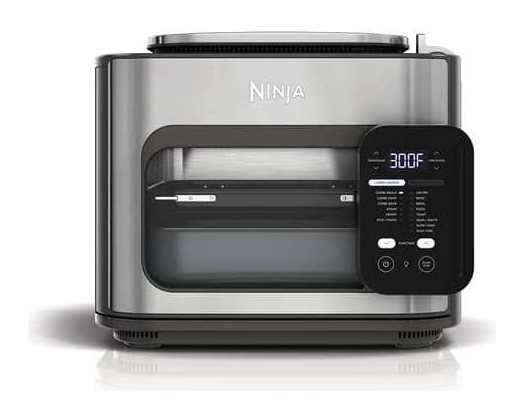
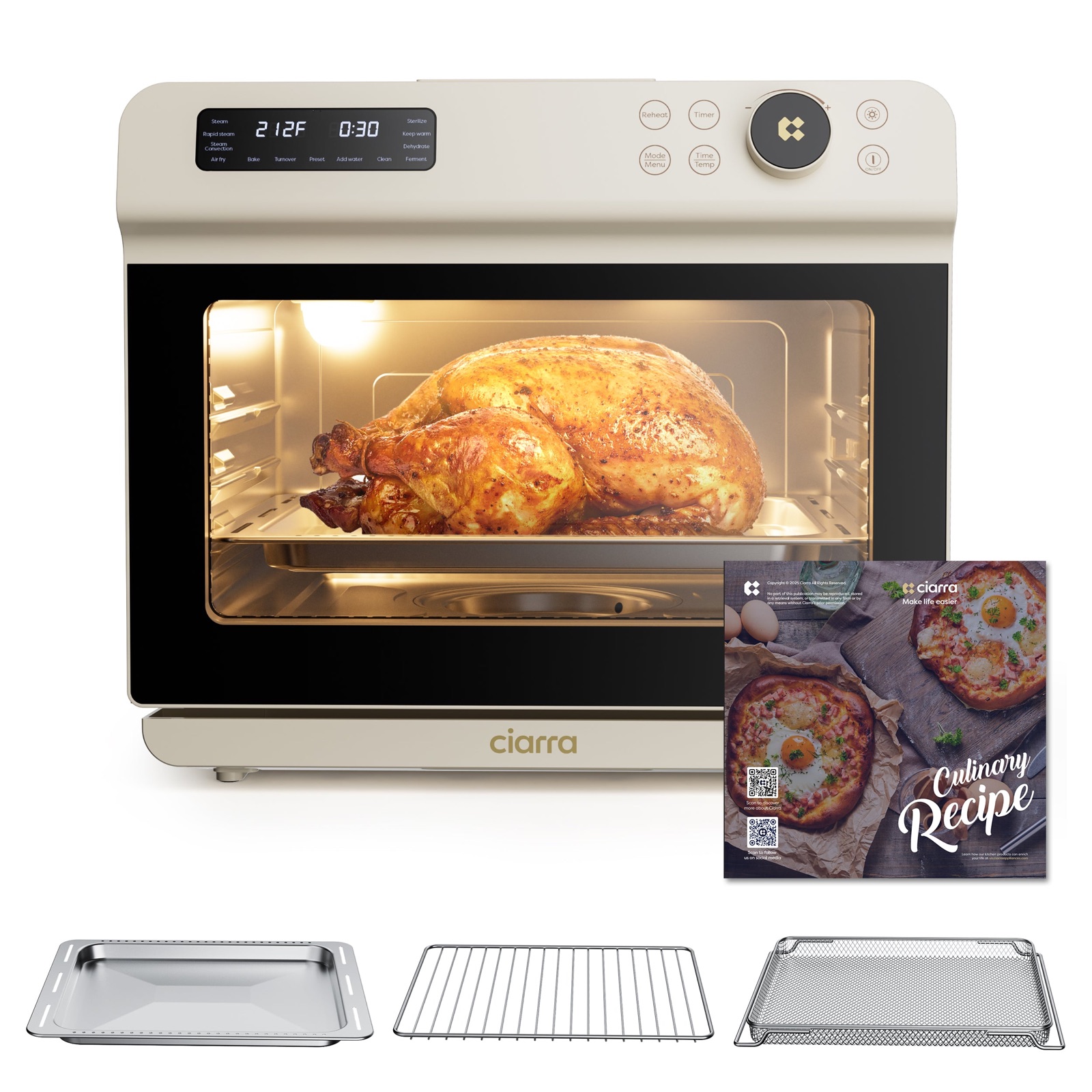
These countertop models offer the best introduction to steam cooking without major investment.
Continue Learning
What a steam oven owner actually needs
Descaler, a perforated pan and a thermometer cover most of it. Affiliate links, at no cost to you.

A general-purpose steam-oven descaler, for ovens whose manual allows a generic one (Anova says any descaling liquid works). Miele and Thermador name their own descalers; use those instead.
View on Amazon · ~$21
Miele's manual recommends perforated containers so steam reaches food from all sides. A 1/3 pan is about 12.75 x 6.9 in; check your oven's interior before buying.
View on Amazon · ~$50
Steam cooks faster than you expect. A one-second probe stops you overcooking fish and chicken while you learn.
View on Amazon · ~$15
Steam burns through cloth mitts. Silicone does not soak, which matters when you open a door full of vapor.
View on Amazon · ~$19