Steam Oven Bread
The secret to bakery-quality crust isn't technique—it's steam. Professional bakers have used steam injection for decades. A steam oven brings that same capability home.
Phase 2: Dry heat for 20-30 min (browning and bake-through)

Why Steam Makes Better Bread
When bread first goes into a hot oven, the surface begins to set almost immediately. Without moisture, this happens too fast—you get a pale, thick, chewy crust.
Steam changes the equation:
- Delays crust formation: Moisture keeps the surface flexible longer, allowing maximum oven spring
- Gelatinizes starches: Creates that shiny, crackly crust characteristic of artisan loaves
- Enables ear formation: The scored sections can open dramatically before the crust sets
- Promotes browning: Gelatinized starches caramelize better during the dry phase
Professional bakeries use steam-injected deck ovens. Home bakers have traditionally improvised with Dutch ovens, ice cubes, or spray bottles. A combi-steam oven gives you actual steam injection—the real thing.
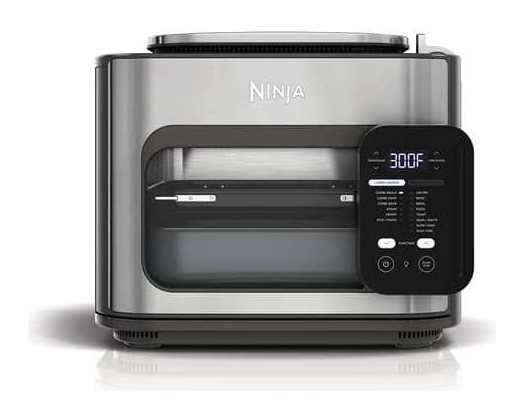
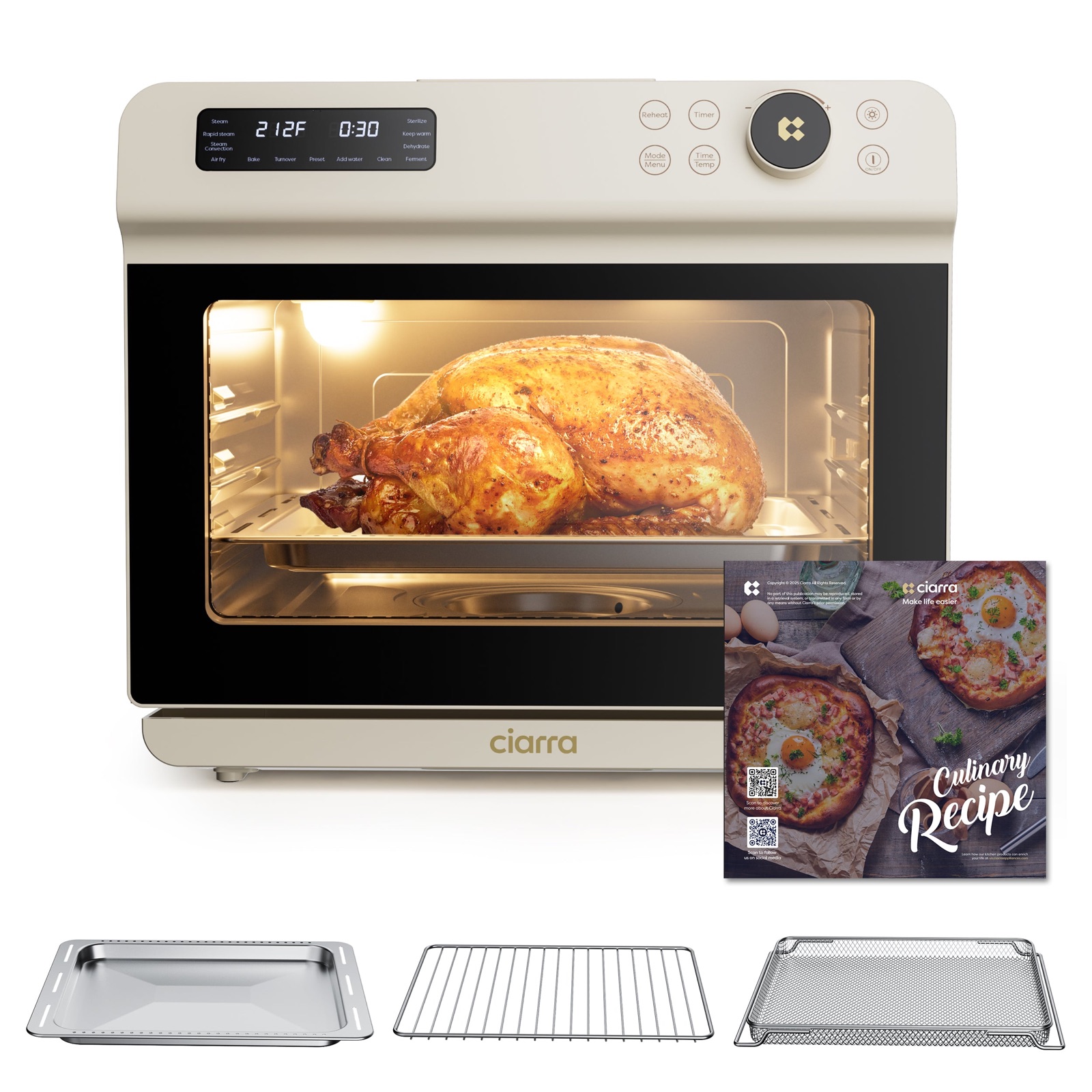
The best steam ovens for bread baking
Picked from the ovens we price-track daily. Some links earn us a commission — never at your cost, never affecting rankings.

Combi-Steam vs. Full Steam
Understanding the difference matters for bread:
Combi-Steam Oven
Combines convection heat with steam injection. Can run dry heat after the steam phase. Ideal for bread—handles both phases in one appliance.
Full Steam Oven
Steam only, typically maxes out around 212°F. Not suitable for bread—can't achieve the high dry heat needed for the second phase.
Step-by-Step: Basic Sourdough Loaf
This method works for any lean bread (sourdough, baguettes, ciabatta, country loaves).
Phase 1: Steam Phase
- Preheat: Set oven to 450-475°F with combi-steam mode (high humidity, typically 80-100%)
- Prepare the loaf: Score the top with a sharp blade or lame
- Load quickly: Place loaf on preheated baking stone or sheet. Close door immediately to trap steam
- Steam bake: 15-20 minutes with steam. The loaf will expand dramatically (oven spring)
Phase 2: Dry Phase
- Switch modes: Turn off steam, continue at 425-450°F convection only
- Vent moisture: Some ovens have a vent button; otherwise crack the door briefly
- Bake through: 20-30 minutes until deep golden brown
- Check doneness: Internal temperature should reach 200-210°F
- Cool completely: At least 1 hour before cutting—the crumb is still setting
Temperature Guide by Bread Type
| Bread Type | Steam Phase | Dry Phase | Total Time |
|---|---|---|---|
| Sourdough boule | 475°F, 20 min | 450°F, 25-30 min | 45-50 min |
| Baguettes | 475°F, 12-15 min | 450°F, 12-15 min | 25-30 min |
| Ciabatta | 450°F, 15 min | 425°F, 15-20 min | 30-35 min |
| Focaccia | 425°F, 10 min | 400°F, 15-20 min | 25-30 min |
| Sandwich loaf (pan) | 400°F, 15 min | 375°F, 25-30 min | 40-45 min |
| Rolls/buns | 425°F, 8-10 min | 400°F, 10-12 min | 18-22 min |
Tips for Best Results
Pro Tips
- Preheat thoroughly: Steam ovens can take longer to preheat. Give it an extra 10-15 minutes after it signals ready
- Use a baking stone: Thermal mass matters. A preheated stone or steel gives better oven spring
- Score decisively: With proper steam, scores will open dramatically. Make them confident and quick
- Don't open early: Opening the door during the steam phase releases all your steam
- Go darker: With combi-steam, bread can handle more color. Don't pull it too early
Enriched Breads: A Different Approach
Brioche, challah, and other enriched doughs don't need as much steam—the fats keep the crust tender. Use a shorter steam phase (5-10 minutes) or skip it entirely for very rich doughs.
Steam Oven Settings by Brand
Different manufacturers handle combi-steam differently:
- Miele: "Combi Steam" mode with humidity slider—set to 80-100% for bread
- Wolf: "Convection Steam" mode at high humidity
- Gaggenau: "Added Steam" function with adjustable levels
- Bosch: "Combi Steam" with humidity percentage control
- DERA: Manual steam burst button during convection mode
Common Problems and Solutions
Pale crust
Not enough dry heat in phase 2. Extend the time or increase temperature. Make sure steam is fully off.
Thick, chewy crust
Not enough steam in phase 1, or steam phase too short. Increase humidity or extend steam time.
Flat loaf, no ear
Oven not hot enough, or dough overproofed. Preheat longer and check your proofing times.
Gummy interior
Underbaked. Use an instant-read thermometer—interior should reach 200-210°F.
Why Not Just Use a Dutch Oven?
Dutch ovens work well for single loaves, but combi-steam ovens offer advantages:
- Capacity: Bake multiple loaves, baguettes, or rolls at once
- Shape freedom: Not limited to round boules that fit the pot
- Visibility: Watch your bread through the oven window
- Precision: Exact control over steam timing and amount
- Safety: No handling a 500°F cast iron pot


Gear for baking bread with steam
What we use for this recipe. Affiliate links, at no cost to you; they never affect our oven rankings.
Holds a wet dough's shape through the proof so it springs in the steam instead of spreading.
View on Amazon · ~$21
Divides, shapes and lifts sticky dough onto the pan without deflating it.
View on Amazon · ~$15
Bread and rice ratios by weight, not cups. Steam baking is less forgiving of guessed hydration.
View on Amazon · ~$10
Cut to the size of any tray. Stops fish and dough sticking to perforated pans.
View on Amazon · ~$6Books for baking with steam
The best-reviewed steam oven baking book, plus the three bread books most home bakers learn from. Affiliate links, at no cost to you.

The best-reviewed cookbook written specifically for combi steam ovens: 25 sweet recipes with the steam settings worked out for you. If you own a combi steam oven and want one book, start here.
View on Amazon · ~$23
The standard home guide to artisan bread. Its recipes assume a covered Dutch oven to trap steam; in a steam oven you get that steam on a dial.
View on Amazon · ~$17
The book that taught a generation to bake open-crumb country loaves, from the San Francisco bakery.
View on Amazon · ~$26
Sourdough explained step by step, with the science of fermentation and baking. A good second book once the basics work.
View on Amazon · ~$17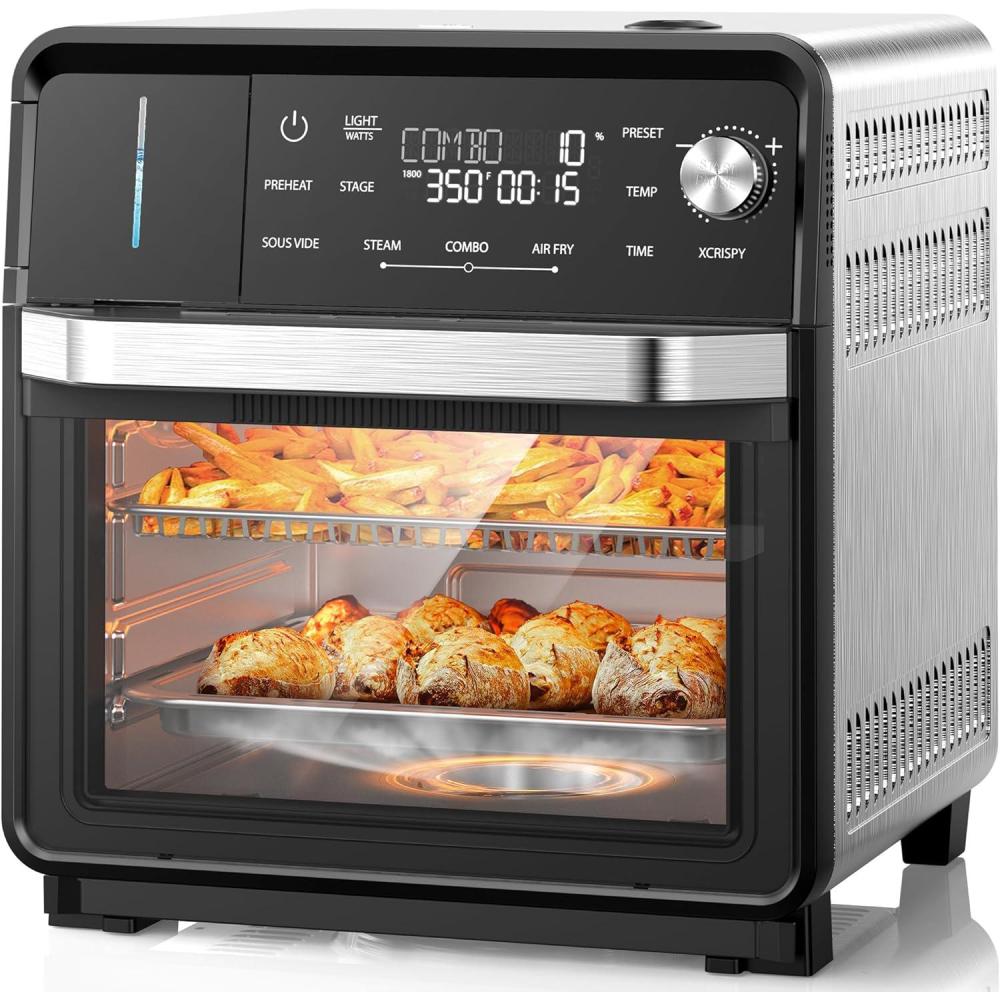
A steam oven turns these techniques into everyday cooking. Here’s our top pick — check today’s price on Amazon.
As an Amazon Associate we earn from qualifying purchases — at no extra cost to you.