Updated October 2026 · numbers pulled live from our catalog and price tracker
Is a Steam Oven Worth It in 2027?
Yes for people who bake bread, reheat a lot, or cook fish and vegetables several times a week. No for people hoping the oven will change their habits. Below is the evidence, not the pitch: what the ovens cost today, what they need from your kitchen, what the research found, and what owners say a year in.
The quick answer
Worth it if you: bake bread (steam is what gives crust and oven spring), reheat leftovers most days (steam beats a microwave on texture), or cook fish, eggs, rice and vegetables regularly. A $180 to $369 countertop model is enough to find out.
Skip it if: you mostly grill or fry, you rarely cook at home, or you want a built-in without checking your electrical first. 57% of the ovens we have verified need a dedicated circuit or hardwiring.
What a steam oven actually does better
Four jobs, and they are the jobs owners end up using it for:
Bread
Bakeries inject steam for the first minutes of a bake. It keeps the crust soft long enough for the loaf to expand, then lets it set thin and crackly. A home oven with a tray of water approximates this; a steam oven does it on a dial. Our bread method.
Reheating
This is the one owners did not buy it for and use it for most. Pizza, rice, roast chicken and fried food come back close to fresh, because moist heat rehydrates instead of drying. Our most-read page is reheating in a steam oven, not a buying guide.
Fish and eggs
Low-temperature steam cooks a fillet evenly edge to centre and sets custards without a water bath. These are the dishes where the precision models (Anova, Miele) justify their price over a $300 unit.
Vegetables and grains
Steamed in a perforated pan, vegetables keep colour and bite; rice and grains cook hands-off in a solid pan. Not glamorous, but it is weeknight use, which is what makes the purchase pay.
What the research says
We keep a verified list of peer-reviewed studies on steam cooking and cite only the indexed journals. The honest summary:
- Comprehensive Reviews in Food Science and Food Safety, 2024: A 2024 review of superheated-steam processing across meat, produce, and cereals reports improved color, texture, and flavor, surface microbial decontamination, better retention of nutrients and bioactive compounds, and reduced energy use relative to conventional thermal processing. The authors characterize commercial adoption as early-stage; the reviewed evidence is predominantly from industrial processing rather than domestic ovens.
- Critical Reviews in Food Science and Nutrition, 2023: A review of superheated-steam processing reports high heat-transfer coefficients and a low-oxygen processing environment that limits lipid oxidation and the formation of harmful compounds, alongside adequate starch gelatinization and reduced nutrient loss, across meat, fruit, vegetables, and cereals. As with other superheated-steam work, the data are drawn largely from industrial rather than domestic settings.
- Meat Science, 2012: Beef roasts from three muscles (longissimus lumborum, deep pectoralis, biceps femoris) were cooked in a steam-generation oven (CVap) versus a forced-air convection oven to three endpoint temperatures. Cooking yields were higher for two of the three muscles in the steam oven, and slice-shear force and sensory tenderness were improved for the biceps femoris; convection produced higher juiciness in the longissimus. The effects were muscle-dependent — the steam oven did not outperform convection across all cuts.
- Journal of Food Science, 2012: Cookies were baked by natural convection, forced convection, and steam-assisted hybrid methods at 165, 180, and 195 °C. Acrylamide concentration and surface browning both increased with temperature and were strongly correlated (browning index tracked acrylamide). Steam-assisted baking gave lower acrylamide at 165 °C and lower surface color at all temperatures; the authors recommend it as a means of reducing acrylamide formation while preserving physical quality.
Read that carefully: the strongest evidence is for yields, tenderness and lower acrylamide in baking. The nutrient claims come mostly from industrial processing, not home ovens. We do not repeat the "retains more vitamins" line because the domestic data is thin.
What owners say a year in
We read owner threads on r/CombiSteamOvenCooking and retailer reviews, and we collect verbatim owner quotes per model. The split is consistent.
What they keep
- Reheating. The most common "I use it every day" reason, even among people who bought it for bread.
- Bread and proteins. Bakers and fish cooks are the most loyal owners and the least likely to sell.
- Hands-off weeknights. Guided programs and probe cooking on the better models.
What they regret
- "I use it less than I expected." Steam cooking is a habit. People who did not already cook the four jobs above drift back to the old oven.
- Water and scale. Refilling a tank every session, wiping condensation, and descaling. Plumbed built-ins skip the refills, not the descaling.
- It will not crisp on its own. You need a combi mode, and even then it is not an air fryer.
“I definitely don't think it's the most commercially refined oven, but I can report that it does the job of steaming pretty darn well, doesn't take up an excessive amount of space, and runs on countertop 120V standard.”
“an owner”
What it really costs
These are today's prices from our tracker, which re-checks retailer and Amazon listings and hides any price older than 60 days.
| Tier | Cheapest | Median | Most expensive | What you get |
|---|---|---|---|---|
| Countertop (18 models) | $180 | $369 | $1,300 | Plugs into a normal outlet. Steam plus convection; precision control and sous-vide modes at the top of the range. |
| Built-in (45 models) | $1,393 | $4,995 | $10,949 | Larger cavities, plumbing options, Miele/Wolf/Thermador/Gaggenau build. Needs a cutout and usually an electrician. |
The costs the sticker price hides
- Electrical. Of the 35 ovens we have verified, 15 plug into a standard outlet; the rest need a dedicated circuit or hardwiring. Budget an electrician for any built-in. Power requirements by model.
- Fit. We have verified cabinet cutouts for 21 of 45 built-ins; several 24-inch "compact" ovens need deeper cabinets than people expect. The cabinet fit study.
- Descaling. Every manual we have read schedules it, and scale is behind most of the owner-fixable error codes. Of the 172 fault codes we transcribed from manuals, 38 are things like "refill the tank" or "descale"; the other 134 are service calls. Steam oven error codes.
- Pans. Most ovens ship with one tray. A perforated steam pan and a solid pan are the first things owners buy, about $50 together.
Prices move. Do not pay list.
Largest swings our tracker has recorded in the last 90 days:
- 8-in-1 Air Fryer Steam Oven Countertop, 13QT Mini Toaster Oven with Steam, Rapid Steam, Air Fry, Vapor Bake, Steam Clean, Bake, Dried, Ferment: $279 to $400 across 53 checks.
- Precision Oven 2.0: $999 to $1,299 across 58 checks.
- Wonder Oven Pro: $252 to $325 across 53 checks.
- ChefCubii 4-in-1 Combi-Steam Oven 1.1 Cu.Ft.: $549 to $699 across 31 checks.
Who should not buy one
- You want crisp more than moist. Buy an air fryer or a convection toaster oven. A combi steam oven is a compromise on crisping.
- You rarely cook. The oven will not change that, and the regret threads are full of this.
- No counter space, no cabinet, no circuit. Check the fit checker before falling for a model.
- You hate maintenance. Tanks, wiping, descaling. It is a few minutes a week, but it is every week.
The verdict
A steam oven is worth it when it replaces work you already do: bread, reheating, fish, vegetables. Start at the countertop tier. $180 to $369 buys a real steam oven, and if the habit sticks you will know exactly which built-in features matter to you. If it does not, you have lost a few hundred dollars, not a kitchen renovation.
The first things owners buy
Descaler, a perforated pan, a thermometer and silicone mitts. Check your manual for which descaler it allows. Affiliate links, at no cost to you.

A general-purpose steam-oven descaler, for ovens whose manual allows a generic one (Anova says any descaling liquid works). Miele and Thermador name their own descalers; use those instead.
View on Amazon · ~$21
Miele's manual recommends perforated containers so steam reaches food from all sides. A 1/3 pan is about 12.75 x 6.9 in; check your oven's interior before buying.
View on Amazon · ~$50
Steam cooks faster than you expect. A one-second probe stops you overcooking fish and chicken while you learn.
View on Amazon · ~$15
Steam burns through cloth mitts. Silicone does not soak, which matters when you open a door full of vapor.
View on Amazon · ~$19Cheapest ways to find out
The lowest-priced consumer steam ovens we track today.
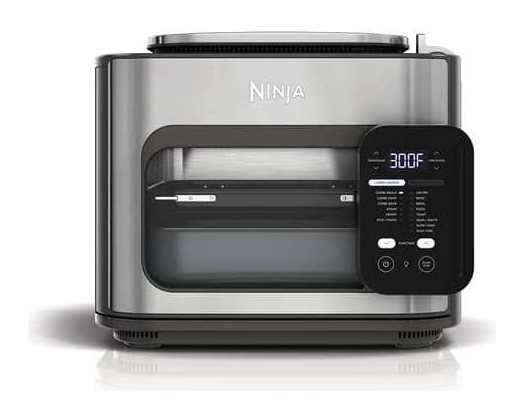
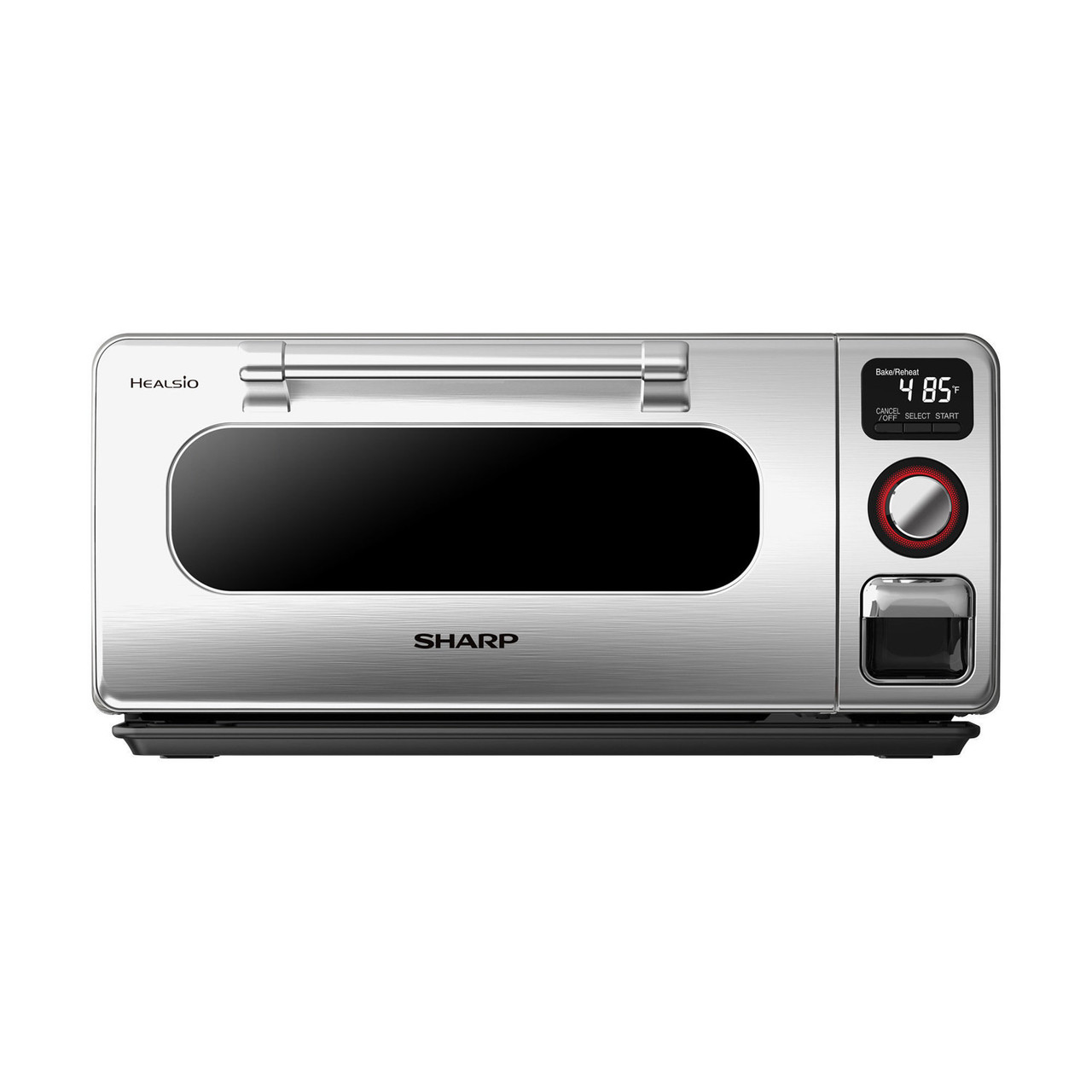
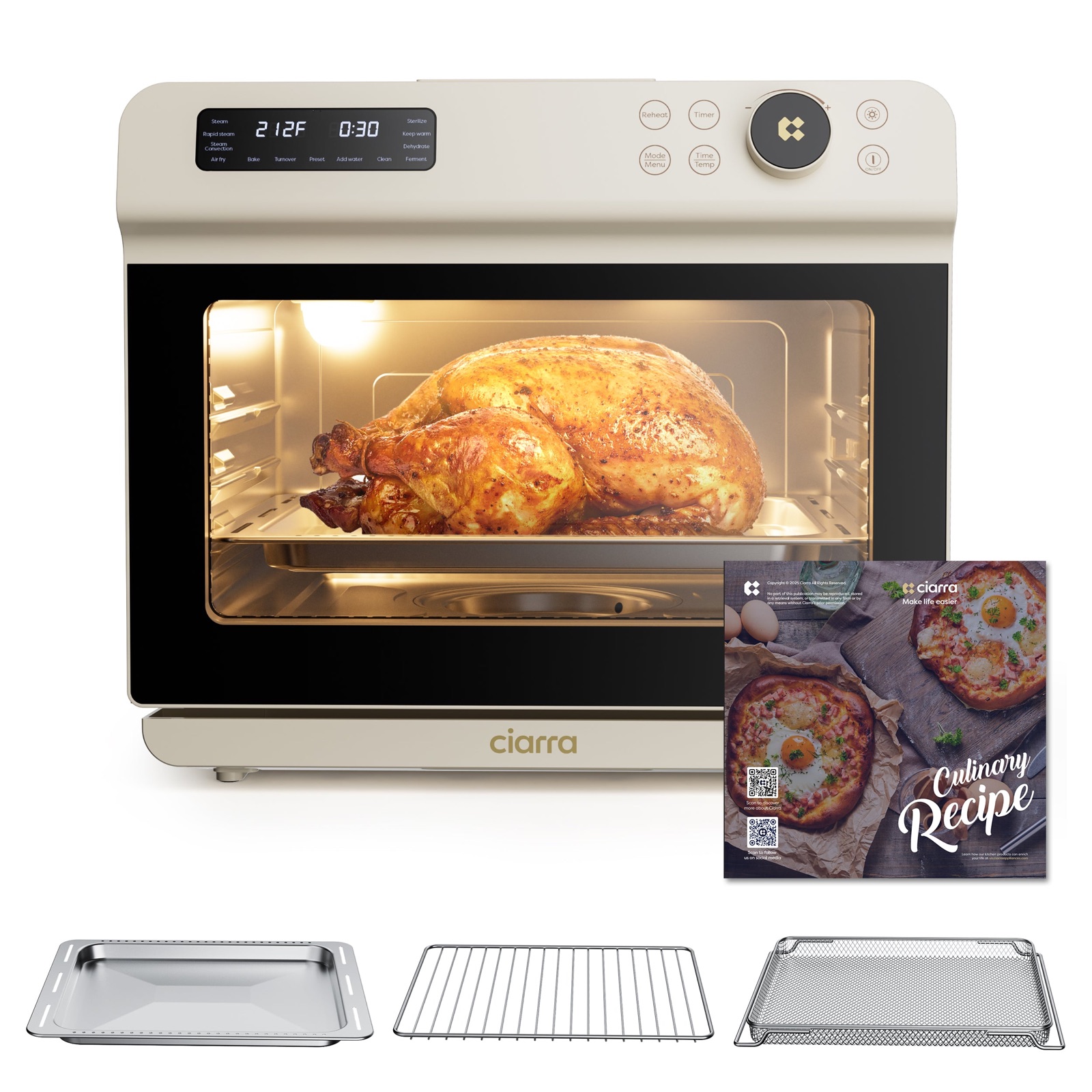
Countertop steam ovens
No installation, standard outlet.
Compare before you decide
Head-to-head pages on the ovens people actually cross-shop: Tovala vs Cuisinart, Anova vs Tovala, Ninja vs Toshiba.
All comparisons →